PSYCHOLOGY WIZARD
  • Home
  • Unit 1 FOUNDATIONS
    • Biological >
      • Adoption & Twin Studies AO1 AO2 AO3 >
        • Gottesman & Shields AO1 AO3
        • Kety AO1 AO3
      • Aggression AO1 AO2 AO3 >
        • Evolutionary Psychology AO1 AO2 AO3
      • The Brain AO1 AO2 >
        • Drugs & the Brain AO1 AO2 AO3
      • Brendgen AO1 AO3
      • Development (Maturation) AO1 AO2 AO3
      • Freud's Psychodynamic Theory AO1 AO3 >
        • Aggression & Freud AO1 AO2 AO3
        • Development & Freud AO1 AO2 AO3
        • Individual Differences & Freud AO1 AO2 AO3
      • Raine AO1 AO3
      • Biological Key Question AO1 AO2
    • Cognitive >
      • Baddeley AO1 AO3
      • Multi Store Model AO1 AO2 AO3
      • Reconstructive Memory AO1 AO2 AO3
      • Schmolck AO1 AO3
      • Tulving's Long Term Memory AO1 AO2 AO3
      • Working Memory AO1 AO2 AO3
      • Cognitive Key Question AO1 AO2
    • Learning >
      • Bandura AO1 >
        • Bandura AO3
      • Becker AO1 AO3
      • Classical Conditioning AO1 AO2 AO3
      • Operant Conditioning AO1 AO2 AO3
      • Pavlov AO1 AO3
      • Social Learning AO1 AO2 AO3
      • Therapies for Phobias >
        • Flooding
        • Systematic Desensitisation
      • Watson & Rayner AO1 AO3
      • Learning Key Question AO1 AO2
    • Social >
      • Agency Theory AO1 AO2 AO3
      • Burger AO1 AO3
      • Situational Factors AO1 AO2 AO3
      • Milgram AO1 >
        • Milgram AO3
      • Realistic Conflict Theory AO1 AO2 AO3
      • Sherif AO1 >
        • Sherif AO3
      • Social Impact Theory AO1 AO2 AO3
      • Social Identity Theory AO1 AO2 AO3
      • Social Key Question AO1 AO2
  • Unit 2 APPLICATIONS
    • Clinical >
      • Depression AO1 AO2 >
        • Biological Explanation AO1 AO2
        • Non-Biological Explanation AO1 AO2
        • Biological Treatment AO1 AO2
        • Psychological Treatment AO1 AO2
      • Diagnosing Abnormality AO1 AO2 AO3
      • Diagnostic Manuals AO1 AO2 AO3
      • Carlsson AO1 AO3
      • Kroenke AO1 AO3
      • HCPC Guidelines AO1 AO2 AO3
      • Rosenhan AO1 AO3
      • Schizophrenia AO1 AO2 >
        • Biological Explanation AO1 AO2
        • Non-biological Explanation AO1 AO2
        • Biological Treatments AO1 AO2
        • Psychological Treatment AO1 AO2
      • Clinical Key Question AO1 AO2
      • Issues & Debates >
        • Social Control AO2 AO3
  • Evaluation
    • Ethics AO1 AO2 AO3
    • Individual Differences AO1 AO2 AO3 >
      • Brain Differences AO1 AO2 AO3 >
        • Personality AO1 AO2 AO3
      • Mental Health Differences AO1 AO2 AO3
      • Differences in Obedience & Prejudice AO1 AO2 AO3
      • Memory Differences AO1 AO2 AO3 >
        • Loftus study AO1 AO2 AO3
    • Nature vs Nurture AO1 AO2 AO3
    • Scientific Status AO1 AO2
  • Methods
    • Animal Studies AO1 AO2 AO3
    • Case Studies AO1 AO2 AO3 >
      • Bradshaw AO1 AO3
      • Scoville & Milner AO1 AO3
    • Content Analyses AO1 AO2 AO3
    • Experimental Method AO1 AO2 AO3
    • Experimental Variables AO1 AO2
    • Hypotheses AO1 AO2
    • Inferential Statistics AO1 AO2 >
      • Chi-Squared Test AO1 AO2
      • Mann-Whitney U Test AO1 AO2
      • Spearman's Rho AO1 AO2
      • Wilcoxon Test AO1 AO2
    • Longitudinal Design AO1 AO2 AO3
    • Quantitative Data & Analysis AO1 AO2 AO3
    • Research Design AO1 AO2 AO3
    • Sampling AO1 AO2 AO3
    • Self Report Method AO1 AO2 AO3 >
      • Brown et al. AO1 AO3
  • Blog
  • Contact
  • Resources

DIAGNOSTIC MANUALS

Picture
You only need SOME of the material on this page. The Exam will expect you to know about EITHER DSM-5 OR DSM-IV; you need to be aware of some of the things that are in the DSM and some research into this as well as arguments about whether this is a good or bad way to classify mental disorders. You also need to be aware of ICD-10. The history of the DSM is NOT needed for the Exam, but it's here to help you evaluate earlier studies like Rosenhan (1973).

Picture

DIAGNOSTIC CLASSIFICATION SYSTEMS

Diagnostic manuals contain the information needed for clinicians to make objective, reliable diagnoses. They contain:
  • Classifications of disorders into different types.
For example, psychoses like schizophrenia involve a break from reality but neuroses like depression involve inappropriate responses to real situations
  • Symptoms of disorders by which they can be recognised.
Symptoms include physical changes (like brain activity and hormone levels), behavioural changes (like involuntary tics and shaking), cognitive changes (like hallucinations and delusions) and affective changes (like mood swings)

What most diagnostic manuals don't do is speculate about the causes of disorder. They're based on observed statistical patterns, not common causes. For example, having hallucinations and having delusions tend to occur together, which is why diagnostic manuals will put them both under the heading "psychosis". It's got nothing to do with them both being caused by the same thing in the brain.
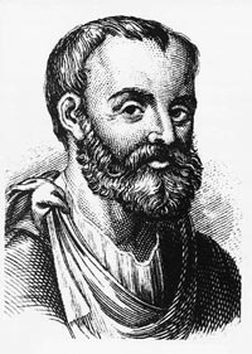
Diagnostic manuals aren't a new thing. The Roman doctor Galen compiled all the known medicine of his time together into books that became medical 'Bibles' for over 1000 years. However, nobody tested Galen's ideas with experiments or observations of their own until the Renaissance. That's what sets modern diagnostic manuals aside from Galen's: they're evidence-based (objective and empirical).
Galen taught the mental disorders were caused by an imbalance of 'humours' in the body. A popular way of re-balancing the humours involved bleeding the patient. Modern medicine views many mental disorders as imbalances of hormones or neurotransmitters (but doesn't recommend bleeding any patients).
Picture
Picture

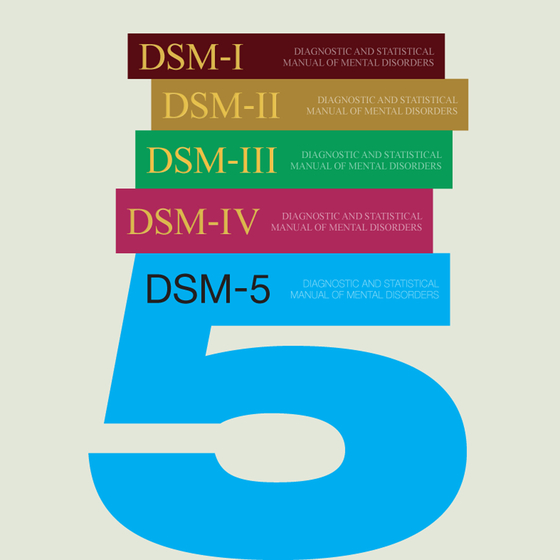
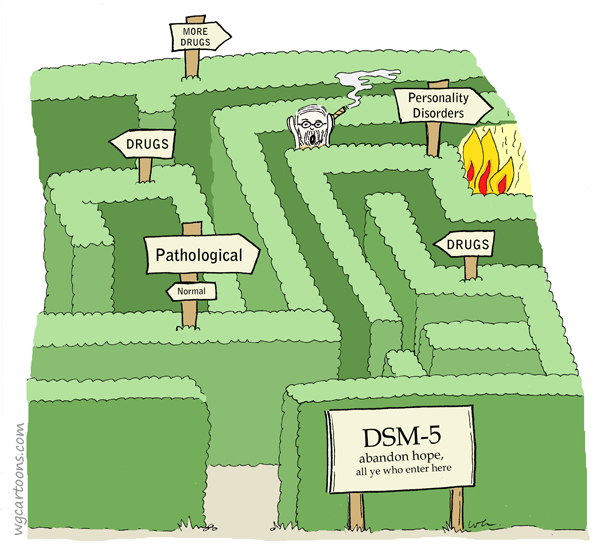
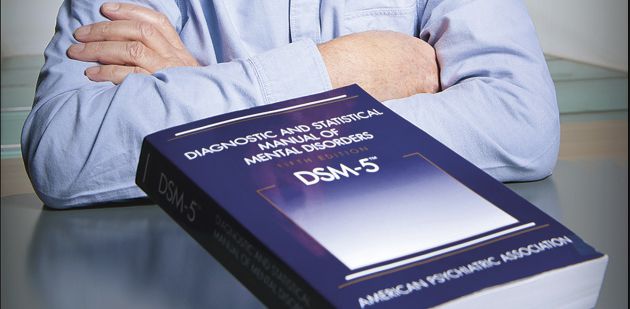
THE DIAGNOSTIC & STATISTICAL MANUAL (DSM)
NOW IN ITS 5TH EDITION

The first DSM was published in 1952 because the US armed forces wanted a guide on the diagnosis of servicemen. The first version had ideas that would be shocking today. Infamously, homosexuality was listed as a "sociopathic personality disorder" in DSM-I and II and remained so until 1973.

Because our understanding of mental health is evolving, the DSM is updated at regular intervals. In each revision, mental disorders that are no longer considered valid are removed, while newly defined disorders are added.
The Diagnostic & Statistical Manual (DSM)  was created to help psychiatrists to communicate using a common system of diagnosis. Its forerunner was published in 1917, containing statistics gathered across mental hospitals.
This early attempt had the politically incorrect title "Statistical Manual for the Use of Institutions for the Insane". It included just 22 diagnoses.
As students you only need to know about the latest edition of DSM, but I'll sum up the earlier versions to give you a sense of context.

DSM-I (1952)

The first DSM began as a manual for military doctors in the US Army and Navy, dealing with the effects of shock, trauma and stress. The first DSM contained 102 diagnostic categories. They were split into two types: those brought on by some sort of brain damage (drugs, shock, injury) and those formed by early experience, notably psychoses and neuroses. Freud's psychodynamic theory was the leading form of clinical psychology in the '30s and '40s and it dominated DSM-I's classifications.

DSM-II (1968, revised 1974)

The psychodynamic approach was challenged in the 1950s and '60s, especially by learning theorists like Albert Bandura and radical psychologists like Thomas Szasz, who argued that mental illness was a "myth". Some Freudian terminology was dropped from DSM-II and there was more emphasis on the "ordinary" mental illness that people might suffer from in everyday life. Homosexuality was no longer a "sociopathic disturbance" but was classified as a sexual deviance. DSM-II now included 182 disorders.

Two bombshells in the 1970s shook confidence in DSM-II:
  • Rosenhan's 1973 study exposed DSM-II as an unreliable tool, because it could not "tell the sane from the insane"
  • Spitzer & Fleiss' 1974 study compared 18 investigations into the the reliability of DSM-II and showed psychiatrists coming up with different diagnoses for the same symptoms. They concluded:
there are no diagnostic categories for which reliability is uniformly high... The level of reliability is no better than fair for psychosis and schizophrenia and is poor for the remaining categories - Spitzer & Fleiss
A revised DSM-II was published in 1974 - with the offensive diagnosis of homosexuality removed, thanks to pressure from gay rights activists - but the whole basis of the DSM had been called into question and a new approach was needed.

DSM-III (1980, revised 1987)

Throughout the 1970s there had been great development in psychometric testing (questionnaires to measure mental health) and in mood altering drugs to treat mental disorders. More and more criticism was directed at the Freudian theories that dominated psychiatry. DSM-III turned its back on Freud and embraced a view of mental illness based on observation and biological evidence. This is why it was called:
a fateful turning point in the history of the American psychiatric profession - Robert Klerman
Unlike earlier editions, DSM-III was popular and widely used. It created a common language of diagnosis in mental health and this standardised language produced a boom in research into mental health in the '80s and '90s.

The number of diagnoses went up to 256 and up to 292 in 1987 . The man in charge of DSM-III was none other than Robert Spitzer, whose research had criticised DSM and removed homosexuality from the previous version. However, Spitzer later criticised DSM-III, saying it led to
the medicalization of 20-30 percent of the population who may not have had any serious mental problems - Robert Spitzer

DSM-IV (1994, revised 2000 as DSM-IV-TR)

With only 297 diagnostic categories, DSM-IV didn't seem to have added more types of madness to the world. However it did change the way mental disorders were described by putting them on 5 "axes".
Wait... axes?
Picture
Picture
Picture
Picture
No, axes as in the plural of "axis".  As in, a line along which you can be positioned. "Axes" are like scales or dimensions or just measurements.
The first axis was actual psychiatric diagnoses and the other axes considered things like personality problems, general medical conditions, environmental stress and "global functioning" - how well a patient can actual function in society without help.
  • DSM-IV is used in Bradshaw's case study of Carol and her global functioning is assessed on DSM-IV's 5th axis
In other words, DSM-IV was trying to be less reductionist and more holistic, by looking at a patient's complete health picture rather than defining them as a set of symptoms. DSM-IV also included "culture-bound syndromes" and recognised that mental health is understood differently in different cultures.
But DSM-IV was never popular like DSM-III had been. It wasn't "user-friendly" and this might be because of its very attempt to be holistic and culturally-sensitive.

DSM-5 (2013)

Why DSM-5 and not DSM-V?

Well, first of all, WELL SPOTTED. And secondly, the DSM is going to be revised much more regularly from now on, so instead of a DSM-6 (or VI) in the late 2020s, expect a DSM 5.1, 5.2 and 5.3 much sooner than that.

DSM-5 is the current edition. Those confusing axes have gone. The number of diagnostic categories has gone down to 157. Homosexuality isn't in it.
Why isn't everybody happy?
DSM-5 has attracted a lot of criticism ever since work began on it in 1999. Here are four important - but controversial - changes:

1

Abolishing the 5 "axes"
The axes from DSM-IV are gone. Critics said these were artificial and made it hard to draw links between different symptoms. The whole thrust of DSM-5 is the links between different symptoms and conditions.
DSM-IV was like a menu that separated Italian food from Indian food. DSM-5 is like a menu that puts the food together but shows you how spicy everything is
Picture

2

Removing unnecessary (and over-used) diagnoses
Austistic spectrum disorder has become just one category. The old categories of autism, Asperger’s, childhood disintegrative disorder, and pervasive developmental disorder have been merged together.

The same has been done with schizophrenia spectrum disorder, which is just one category. The old sub-types of paranoid, catatonic, disorganised, undifferentiated and residual schizophrenia have been merged together.

Similarly, Childhood Bipolar Disorder has been replaced by a more general Disruptive Mood Dysregulation Disorder (DMDD). 
Getting rid of these separate diagnoses is a good thing if they were being over-used (a lot of people felt Childhood Bipolar Disorder was being applied too quickly to kids who were just having tantrums). Having just a single diagnosis that can be applied to a lot of people definitely makes diagnosis easier. But does it make it less valid?

3

Reflecting social change
Some changes to DSM-5 reflect changes in society.
  • The wars in Iraq and Afghanistan have given us a lot more insight into Post-Traumatic Stress Disorder (PTSD) and DSM-5 goes covers more symptoms of this, such as flashbacks.
  • Dementia is a growing problem now that people live longer and DSM-5 reclassifies this as a neurocognitive disorder and separates major dementia and mild dementia to encourage doctors to diagnose it early.
  • In a multicultural society, there is more awareness of cultural differences in mental health. DSM-5 gets rid of the list of "culture-bound syndromes" and replaces it with advice on "Cultural Concepts of Distress".
These are good examples of the DSM keeping pace with social change - the way DSM-I and II failed to do with homosexuality. The reclassification of dementia could be a useful point for your Cognitive Key Question.

4

Reflecting tolerant attitudes
The offensive phrase "mental retardation” is finally out of the DSM. The new phrase is “intellectual disability” or Intellectual Development Disorder. (IDD). The importance of IQ scores has been downplayed in diagnosing IDD. The DSM-IV identified an IQ of less than 70 as "retarded" but DSM-5 diagnosis is based more on failure to function appropriately.
Some people think removing offensive language and replacing it with new, more neutral terms is just "political correctness gone mad". The rest of us will enjoy re-reading "Of Mice & Men" as the story of George and his friend Lennie who suffers from Intellectual Development Disorder.
Picture

THE INTERNATIONAL STATISTICAL CLASSIFICATION OF DISEASE (ICD)
NOW IN ITS 10TH EDITION

DSM is an American diagnostic manual which has huge influence because of the clinical research that goes on in the USA. However, the world's most popular diagnostic manual is the International Statistical Classification of Disease (ICD), now in its 10th edition (ICD-10). The ICD is supported by the World Health Organisation (WHO) and is supposed to be updated every ten years. ICD-10 came out in 1994; ICD-11 has been pushed back to 2018.

The ICD was originally the "International List of Causes of Death". It got its current name in 1949 with ICD-6, which also introduced mental disorders for the first time.
ICD is produced free of charge by the WHO. It's aim is to improve healthcare across the world. It includes all diseases and disorders, not just mental disorders. ICD-10 includes 10 groups of mental disorders, such as delusional disorders, mood disorders, clinical/personality disorders etc. It is bases its diagnoses around symptoms.

HOW DOES IT WORK?

The ICD contains section F, which is specific for mental health disorders. Within this section, ICD groups each disorder as being part of a family. For example, depression is part of the family of mood (affective) disorders.

These disorders are coded "F" followed by a digit to represent the family (3 for mood disorders), which is the followed by another digit to represent the specific disorder (F32 is depression whereas F31 is bipolar disorder).

More digits tell you the specific sub-type of disorder (for example, F32.0 is mild depression). Finally, very specific categorisation can be added by further digits (F32.0.00 is mild depression without somatic symptoms).

This coding allows the clinician convey the diagnosis easily in a specific way, going from the general to the specific. The clinician can use the system to guide their diagnosis through a clinical interview with the patient (first identify the client has a mood disorder... then the type... then the sub-type).
This process isn't as easy as I make it sound because mental disorders are hard to pin down. But the classification system actually AIDS diagnosis, making it more likely different clinicians will arrive at the same diagnosis (reliability) and that the diagnosis is true (validity).
Picture

APPLYING DIAGNOSTIC MANUALS
AO2

Healthcare in the USA is big business. In 2011, $2.7 trillion was spent on health. This represents 17.9% of America's gross domestic product (GDP). NHS spending represents just 8.2% of the UK’s GDP. However, treating mental health conditions (including dementia) is the highest area of spending within the NHS.

This means there's a lot of money at stake when a diagnosis appears in a diagnostic manual or is removed from it. "Official diagnoses" create a demand for medicines and funded research. A 2011 article in the Psychiatric Times points out that 67% of the DSM-5 task force (18 out of 27 members) had direct links to the pharmaceutical industry that makes medical drugs ("Big Pharma" as it is called). The fact that the task force met in secret to compile DSM-5 added to the fear that the process was corrupt.

The DSM-5 task force argued that close co-operation between researchers and industry is to be expected. They also claimed to be meeting in secret precisely to prevent corruption.

The DSM-5 has been criticised for 'medicalising' normal behaviour and mood. An open letter and accompanying petition about DSM-5 was published by the Society for Humanistic Psychology. These psychiatrists were:
concerned about the lowering of diagnostic thresholds for multiple disorder categories, about the introduction of disorders that may lead to inappropriate medical treatment of vulnerable populations, and about specific proposals that appear to lack empirical grounding - Brent Robbins
These concerns were supported by Allen Frances, who had chaired the previous DSM-IV task force. He is concerned that DSM-5 will lead to people who are among the "worried well" being diagnosed with mental disorders. The "worried well" are people who are fundamentally healthy but bring up concerns with their doctors about their moods or behaviour or about their children's moods or behaviours.

A particular criticism is over grief. It's normal and healthy to grieve when a loved one dies. DSM-IV contains a "bereavement exclusion criterion" for Major Depressive Disorder. This meant that you couldn't be diagnosed as depressed if you had been bereaved (lost a loved one) up to 2 months ago. DSM-5 removes this exclusion, allowing for a grieving person to be diagnosed with a mental disorder.
Bereavement-depression vs Major Depressive Disorder
Picture

EVALUATING DIAGNOSTIC MANUALS
AO3

Credibility

Many mental health professionals defend DSM-5 and its principles. They argue that, while DSM (and the  ICD system) may be flawed, it is better than anything else currently available.
Our classification of mental disorders is no more than a collection of fallible and limited constructs that seek but never find an elusive truth. Nevertheless, this is our best current way of defining and communicating about mental disorders - Allen Frances
DSM-5 was greeted positively by the UK mental health charity Mind:
A diagnosis can provide people with appropriate treatments, and it could give the person access to other support and services, including benefits - Paul Farmer
Diagnostic manuals are also important for research. If you are researching schizophrenia, you need to agree on what counts as schizophrenia beforehand. It's impractical carry out a full psychological assessment of every individual taking part.

The bombshell research by Rosenhan (1973) and Spitzer & Fleiss (1974) showed how important it was to make diagnosis more valid and reliable. Mitchell Wilson (1993) suggests that DSM-III was developed precisely to tackle the unreliability of the previous systems.

There is evidence that the DSM is improving. Brown et al. (2001) tested the reliability of the DSM-IV. They studied anxiety and mood disorders in 326 out-patients in Boston, USA. The patients underwent two independent clinical interviews and there was high level agreement for most of the DSM-IV categories. This is a completely different outcome from what Robert Spitzer found back in the '70s.

Despite the concerns about over-medicalisation, DSM-5 has fewer diagnostic categories than the previous version.  In the past, patients who "ticked the boxes" automatically qualified for a diagnosis. For example, having an IQ under 70 meant you were "mentally retarded". DSM-5 encourages clinicians to look at other factors, like functioning or distress.

Even where over-medicalisation is a risk, DSM-5 is responding to the latest research. With people living longer and dementia becoming a huge problem, it's important that signs of dementia are diagnosed as early as possible. The new diagnosis of Mild Neurocognitive Disorder will make doctors less likely to dismiss symptoms as just "old-age forgetfulness".
Objections

The reception to the new DSM-5 has been mixed. The British Psychological Society (BPS) published a largely critical response in which it attacked the whole concept of the DSM. It argued that the diagnosis should fit the patient, but the DSM-5 tries to make the patient fit the diagnosis.
We believe that any classification system should begin from the bottom up – starting with specific experiences, problems, symptoms or complaints - BPS
You'll have to decide for yourself whether this criticism is just or too harsh. DSM-5 doesn't increase the number of diagnoses and replaces the idea of people automatically qualifying for a mental disorder because they "tick the boxes" with advice to help clinicians come up with an informed diagnosis.
Allen Frances was chair of the taskforce for DSM-IV. In an article entitled DSM 5 Is Guide Not Bible – Ignore its Ten Worst Changes, he highlights examples of over-medicalisation of mental health. He singles out:
  • Disruptive Mood Dysregulation Disorder (DMDD), which replaces Childhood Bipolar Disorder. Frances argues this is even more vague that what it replaced and will lead to more children who have tantrums being diagnosed as mentally ill
  • Normal grief being diagnosed as Major Depressive Disorder (MDD) because the bereavement exclusion criterion has been removed.
  • Forgetfulness in old age might be diagnosed as Mild Neurocognitive Disorder, leading to the "worried well" being diagnosed with dementia
  • Binge Eating Disorder will lead to a mental disorder being diagnosed for people who are just greedy. Behavioural Addiction is a diagnosis that be applied to anything we like doing a lot (like Pokemon Go).
Frances' criticisms amount to the warning that DSM-5 will create a lot of Type I Errors (False Positives).
Not only does this lead to people thinking they're sick when they're not, it leads to the unnecessary prescribing of medical drugs. This is expensive (but great news for "Big Pharma") and could be dangerous, because these drugs have side-effects.
Picture
Of course, Frances is ignoring the danger of False Negatives. Some people who throw tantrums, grieve excessively or can't stop playing Pokemon Go really DO have a mental disorder and need help.
Differences

There are two diagnostic manuals in use worldwide: DSM and ICD. DSM is American and only describes mental disorders. ICD is international and describes all known diseases and disorders, so it's much bigger.

ICD-10 is distributed freely by the WHO and can be viewed online. DSM must be paid for and generates a huge income for the American Psychological Association (APA).

ICD-10 and DSM-5 are similar in many ways, describing the same disorders and often using the same wording. Unlike DSM-IV, DSM-5 uses the symptom-based approach that ICD has always followed.

There has been found to be only a 68% agreement (Andrews et al, 1999) between the ICD-10 and DSM-IV on an assessment of 1500 patients. However, Andrews found agreement on diagnosis for depression, substance dependence and generalised anxiety.

Hoffman et al. (2015) compared DSM-5 and ICD-10 in a study of alcoholism among over 7000 prisoners. The two systems agreed in diagnosing healthy individuals and those with severe alcoholism. However, the diagnoses differed when it came to mild-to-moderate alcohol disorders. About a third of those with mild alcohol disorder according to DSM-5 received no diagnosis from ICD-10.
  • This could be a False Negative from ICD-10, meaning these sufferers would miss out on treatment (this is the view taken by Hoffman); or
  • This could be a False Positive from DSM-5, an example of the over-medicalisation critics warn about
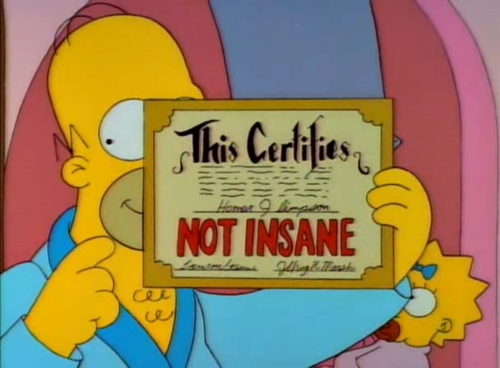
The Simpsons' 3rd season episode "Stark Raving Dad" pokes fun at misdiagnosis
Picture
The studies by Andrews and Hoffman both suggest there is inter-rater reliability and concurrent validity with the DSM and ICD, but the reliability and validity could be a lot higher, especially with mild-to-moderate conditions.
Critics of the two diagnostic manuals argue that we should be classifying diagnoses in different ways. Other proposed systems have included:
  • Systems based purely on neurology (brain biology), such as assessing unusual levels of neurotransmitters. The problem with this is that it is a very reductive way of looking at mental health.
  • Systems based on measuring the psychological dimensions of personality (such as extraversion). This is supported by many humanist psychologists who criticised DSM-5 but it involves relying on psychometric tests.
  • Systems based on the development of the mind, such as Freud's psychodynamic theory. The DSM started out this way but was criticised by being unreliable and subjective.
Applications

Although the NHS uses ICD-10, the DSM-5 has a big influence on how mental health is thought about and treated in this country. It helps set research agendas, brings conditions into the public eye and influences clinical guidelines.
  • British research tends to use the DSM in order to fit in with American research, as most psychological research that is published and widely known is conduced in the US.
  • Previous versions of the DSM made new conditions better known in the UK, such as ADHD and Borderline Personality Disorder.
  • Patients increasingly self-diagnose using medical websites which are based on DSM-5; this puts pressure on doctors to know about these diagnoses and offer treatments for them, even if they don't agree with them

ICD-10 is currently being updated and DSM-5 may have an influence on the mental health section of the ICD-11. The two classification systems are becoming more and more similar.
Picture

EXEMPLAR ESSAY
How to write a 8-mark answer

"The purpose of classification systems is to provide clear descriptions of diagnostic categories in order to enable clinicians and investigators to diagnose, communicate about, study and treat people with mental disorders."
Evaluate either the DSM-IV or DSM-5 classification system for the diagnosis and classification of mental disorders. [12 marks]
  • A 12-mark “evaluate” question awards 6 marks for describing the manual , its use or research into it (AO1) and 6 marks for evaluating whether it's good or bad (AO3).


The Diagnostic & Statistical Manual (DSM) is the "Bible" of American psychiatry. The 5th edition came out in 2013. DSM-5 replaced the 5 axes of DSM-IV with a symptom-based approach which enables new mental disorders to be identified more reliably.

DSM helps clinicians because it classifies disorders into different types and identify the symptoms associated with them. For example, schizophrenia is classified as mild or severe based on the number of symptoms.

DSM-5 removed unreliable diagnostic categories to prevent false positives (Type I errors). For example, it removed different types of autism and replaced mental retardation with intellectual development disorder (IDD).

DSM-5 is controversial because it is believed to encourage the "over-medicalisation" of normal conditions, leading to more prescriptions of drugs. An example might be Mild Neurocognitive Disorder (MND), which might lead to old people with ordinary forgetfulness being diagnosed as ill.

On the other hand, MND might encourage doctors to focus on the first symptoms of dementia and stop it getting worse. Even though Britain's NHS uses ICD-10, DSM-5 still affects psychiatry in Britain because of the research that goes on in the US.

However, the DSM has made a positive contribution by making new conditions known outside the USA. For example, ADHD and Borderline Personality Disorder are now recognised in the UK.

In conclusion, DSM-5 might lead to social control because it creates more false positive diagnoses. Allen Francis argues that the DSM-5 will medicalise the "worried well", such as elderly people being diagnosed with dementia because they are forgetful. However its intention is to make sure people get problems recognised and treated and the new classification of MND might lead to the early stages of dementia being detected sooner, reducing false negatives.
  • Notice that for a 8-mark answer you don’t have to include everything about the DSM. You will notice I haven't mentioned the debate about children's tantrums or  "Big Pharma" or the recovery model. But it is a balanced answer - one half description and one half evaluation.
  • Notice that I introduce the evaluation point first then follow it up with description/knowledge; I try to link the conclusion to an Issue/Debate (but this isn't compulsory).
Home
Blog
Contact

PSYCHOLOGYWIZARD.NET
  • Home
  • Unit 1 FOUNDATIONS
    • Biological >
      • Adoption & Twin Studies AO1 AO2 AO3 >
        • Gottesman & Shields AO1 AO3
        • Kety AO1 AO3
      • Aggression AO1 AO2 AO3 >
        • Evolutionary Psychology AO1 AO2 AO3
      • The Brain AO1 AO2 >
        • Drugs & the Brain AO1 AO2 AO3
      • Brendgen AO1 AO3
      • Development (Maturation) AO1 AO2 AO3
      • Freud's Psychodynamic Theory AO1 AO3 >
        • Aggression & Freud AO1 AO2 AO3
        • Development & Freud AO1 AO2 AO3
        • Individual Differences & Freud AO1 AO2 AO3
      • Raine AO1 AO3
      • Biological Key Question AO1 AO2
    • Cognitive >
      • Baddeley AO1 AO3
      • Multi Store Model AO1 AO2 AO3
      • Reconstructive Memory AO1 AO2 AO3
      • Schmolck AO1 AO3
      • Tulving's Long Term Memory AO1 AO2 AO3
      • Working Memory AO1 AO2 AO3
      • Cognitive Key Question AO1 AO2
    • Learning >
      • Bandura AO1 >
        • Bandura AO3
      • Becker AO1 AO3
      • Classical Conditioning AO1 AO2 AO3
      • Operant Conditioning AO1 AO2 AO3
      • Pavlov AO1 AO3
      • Social Learning AO1 AO2 AO3
      • Therapies for Phobias >
        • Flooding
        • Systematic Desensitisation
      • Watson & Rayner AO1 AO3
      • Learning Key Question AO1 AO2
    • Social >
      • Agency Theory AO1 AO2 AO3
      • Burger AO1 AO3
      • Situational Factors AO1 AO2 AO3
      • Milgram AO1 >
        • Milgram AO3
      • Realistic Conflict Theory AO1 AO2 AO3
      • Sherif AO1 >
        • Sherif AO3
      • Social Impact Theory AO1 AO2 AO3
      • Social Identity Theory AO1 AO2 AO3
      • Social Key Question AO1 AO2
  • Unit 2 APPLICATIONS
    • Clinical >
      • Depression AO1 AO2 >
        • Biological Explanation AO1 AO2
        • Non-Biological Explanation AO1 AO2
        • Biological Treatment AO1 AO2
        • Psychological Treatment AO1 AO2
      • Diagnosing Abnormality AO1 AO2 AO3
      • Diagnostic Manuals AO1 AO2 AO3
      • Carlsson AO1 AO3
      • Kroenke AO1 AO3
      • HCPC Guidelines AO1 AO2 AO3
      • Rosenhan AO1 AO3
      • Schizophrenia AO1 AO2 >
        • Biological Explanation AO1 AO2
        • Non-biological Explanation AO1 AO2
        • Biological Treatments AO1 AO2
        • Psychological Treatment AO1 AO2
      • Clinical Key Question AO1 AO2
      • Issues & Debates >
        • Social Control AO2 AO3
  • Evaluation
    • Ethics AO1 AO2 AO3
    • Individual Differences AO1 AO2 AO3 >
      • Brain Differences AO1 AO2 AO3 >
        • Personality AO1 AO2 AO3
      • Mental Health Differences AO1 AO2 AO3
      • Differences in Obedience & Prejudice AO1 AO2 AO3
      • Memory Differences AO1 AO2 AO3 >
        • Loftus study AO1 AO2 AO3
    • Nature vs Nurture AO1 AO2 AO3
    • Scientific Status AO1 AO2
  • Methods
    • Animal Studies AO1 AO2 AO3
    • Case Studies AO1 AO2 AO3 >
      • Bradshaw AO1 AO3
      • Scoville & Milner AO1 AO3
    • Content Analyses AO1 AO2 AO3
    • Experimental Method AO1 AO2 AO3
    • Experimental Variables AO1 AO2
    • Hypotheses AO1 AO2
    • Inferential Statistics AO1 AO2 >
      • Chi-Squared Test AO1 AO2
      • Mann-Whitney U Test AO1 AO2
      • Spearman's Rho AO1 AO2
      • Wilcoxon Test AO1 AO2
    • Longitudinal Design AO1 AO2 AO3
    • Quantitative Data & Analysis AO1 AO2 AO3
    • Research Design AO1 AO2 AO3
    • Sampling AO1 AO2 AO3
    • Self Report Method AO1 AO2 AO3 >
      • Brown et al. AO1 AO3
  • Blog
  • Contact
  • Resources